

Many people would like straighter teeth but feel hesitant about wearing traditional metal braces. Clear aligners offer another option: a series of removable, nearly transparent trays designed to move teeth gradually.
For adults and teens researching clear aligners in Plantation, FL, it helps to understand what treatment requires before making a decision. Aligners may be discreet and convenient, but they still involve professional planning, consistent daily wear, and ongoing dental supervision.
This guide explains how clear aligners work, what patients can expect, and why an in-person evaluation is an important first step.
This article provides general educational information and is not a substitute for an examination or personalized advice from a dentist or orthodontist.
What Are Clear Aligners?
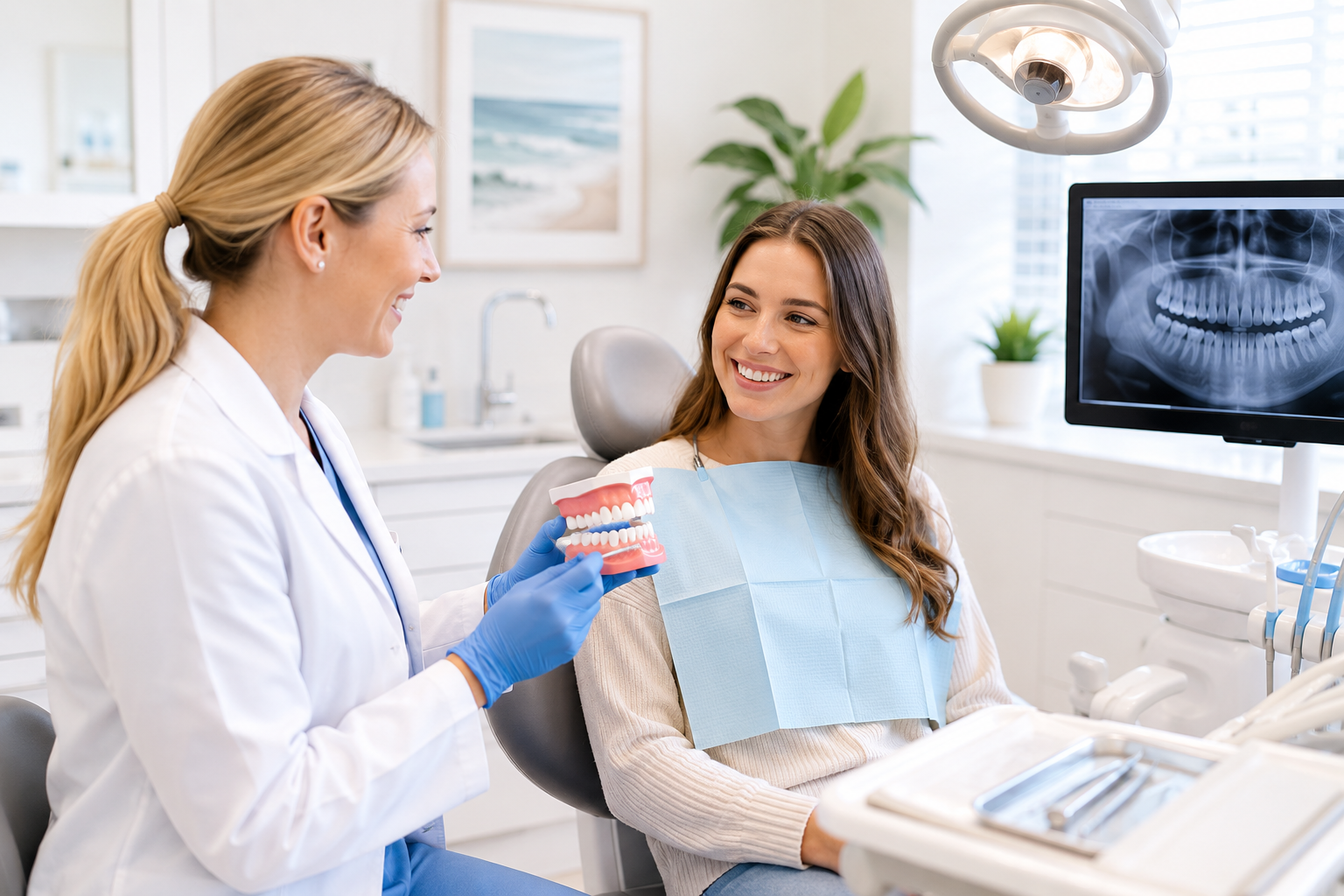
Clear aligners are custom-fitted dental trays that apply controlled pressure to selected teeth. Instead of using brackets and wires, treatment progresses through a sequence of trays. Each set is shaped slightly differently to guide the teeth toward their planned positions.
The trays fit closely over the teeth, so they are generally less noticeable than metal braces. They are also removable for eating, drinking anything other than water, brushing, and flossing.
Atlas Smiles™ provides clear aligner treatment in Plantation using Invisalign® and ClearCorrect. Although these systems share the same general approach, the appropriate option depends on the patient's teeth, bite, oral health, and treatment goals.
What Can Clear Aligners Address?
Depending on the individual case, aligners may be considered for concerns such as:
- Crowded or overlapping teeth
- Small spaces or gaps between teeth
- Certain overbites, underbites, or crossbites
- Teeth that have shifted after previous orthodontic treatment
- Mild to moderate tooth rotation or misalignment
Not every orthodontic concern can be treated predictably with aligners alone. More complex tooth movements or significant jaw-position problems may require braces, additional dental procedures, or evaluation by an orthodontic specialist.
Appearance is also only part of the picture. A dentist must consider how the upper and lower teeth meet, whether the gums and supporting bone are healthy, and whether existing fillings, crowns, or missing teeth affect the plan. An in-person assessment helps determine whether moving the teeth is appropriate and safe.
Benefits Patients Often Appreciate
A discreet appearance
Because the trays are transparent, many people can wear them at work, school, or social events without drawing much attention to treatment. Small tooth-colored attachments may sometimes be placed on certain teeth, so the aligners are not completely invisible.
Removable trays
Patients can remove their aligners for meals. That means there are generally fewer food restrictions than with fixed braces, provided the trays are put back in promptly and worn as directed.
Easier access for brushing and flossing
Removing the trays allows a person to clean the teeth without navigating around brackets and wires. Good hygiene remains essential because aligners can hold plaque, food debris, or sugary liquid against the teeth if they are placed over an unclean smile.
A digitally planned process
Digital scans and treatment-planning technology can help the dental team map proposed tooth movements and design the tray sequence. A digital preview can be useful for explaining the plan, but it is a simulation rather than a guaranteed final result. Teeth do not always move exactly as predicted, so refinements may be needed.
How the Clear Aligner Process Works
1. Consultation and oral health evaluation
The first visit typically includes a discussion of the patient's concerns and goals. The dentist examines the teeth, gums, and bite and may take digital scans, photographs, or dental X-rays when clinically appropriate.
Issues such as untreated cavities, gum inflammation, or other oral health concerns may need attention before orthodontic movement begins. This preparation helps create a healthier foundation for treatment.
2. Personalized treatment planning
Using the examination and imaging information, the provider develops a plan for how the teeth should move. The plan also considers whether attachments, tooth reshaping, or other supporting steps may be recommended.
This is a good time for the patient to ask what the plan can realistically accomplish, whether alternatives exist, and how progress will be monitored.
3. Receiving the aligners
Once the custom trays are ready, the dental team checks their fit and explains how to insert, remove, and clean them. Patients receive instructions about when to move to the next set. That schedule should be followed exactly rather than accelerated without professional approval.
4. Daily wear and progress visits
Clear aligners work only while they are being worn. According to the Cleveland Clinic's overview of clear aligner treatment, patients are commonly instructed to wear the trays for 22 to 23 hours per day, removing them for meals and oral hygiene. A patient's own provider may give instructions based on the specific treatment plan.
Periodic appointments allow the dental team to check whether the trays fit and whether the teeth are tracking as planned. Skipping these visits can allow a small problem to become more difficult to correct.
5. Retention after active treatment
Reaching the last tray does not mean the teeth will stay in position automatically. Teeth can shift after orthodontic treatment, so a retainer is usually an important part of protecting the result. Atlas Smiles™ explains that patients may receive a nighttime retainer after completing their aligner series.
The recommended retainer schedule can change over time. Patients should follow their dentist's instructions and bring the retainer to dental visits if its fit changes.
Do Clear Aligners Hurt?
Some pressure or tenderness can occur when a new tray begins moving the teeth. Patients often describe the sensation as tightness rather than sharp pain. Temporary changes in speech or mild irritation along the tongue, cheeks, or gums may also occur while the mouth adjusts.
Persistent sharp pain, significant swelling, a damaged tray, or an aligner that no longer fits should be reported to the treating provider. Patients should not trim or reshape a tray unless instructed to do so.
Daily Care Tips for Successful Treatment
- Wear the trays consistently. Frequent or extended removal can delay progress or cause the next aligner to fit poorly.
- Remove aligners for meals. Chewing with the trays can crack, distort, or stain them.
- Drink plain water while wearing them. Sugary, acidic, or strongly colored drinks may increase staining and oral health concerns.
- Brush and floss before reinserting them. When brushing is not immediately possible, rinsing the mouth and trays can be a helpful temporary step.
- Clean trays gently. Follow the provider's cleaning instructions and avoid hot water, which may distort the material.
- Use the storage case. Wrapping an aligner in a napkin makes it easy to lose or accidentally discard.
- Keep appointments. Monitoring helps the dental team identify tracking, hygiene, or bite concerns.
How Long Does Treatment Take?
There is no single treatment timeline that applies to everyone. Duration depends on how far the teeth must move, the types of movement required, the patient's biological response, and how consistently the trays are worn.
A relatively small correction may require less time than a plan involving several bite or alignment concerns. Additional refinement trays may also be recommended if certain teeth do not follow the original plan closely enough. A consultation provides a more meaningful estimate than a general online average.
What Affects the Cost of Clear Aligners?
Clear aligner fees vary because every plan is different. Factors may include:
- The complexity of the tooth and bite movements
- The expected length of active treatment
- The aligner system selected
- The number of progress visits or refinement trays needed
- Whether retainers or related services are included
- Available orthodontic insurance benefits
Patients should ask for a written estimate that explains what the proposed fee includes. A dental office can also help review insurance benefits and available payment arrangements, but coverage and out-of-pocket costs depend on the individual plan.
Clear Aligners vs. Braces
Neither option is automatically better for every patient. Clear aligners offer discretion and removability, but they demand consistent wear and responsible tray care. Braces remain attached to the teeth, which removes the temptation to leave an appliance out, and they may provide advantages for certain complex movements.
The best choice depends on clinical needs as well as lifestyle. A patient who frequently misplaces removable items, snacks throughout the day, or cannot commit to the prescribed wear schedule may find aligners challenging. A dentist or orthodontist can explain the practical tradeoffs for the individual case.
Frequently Asked Questions
Can patients eat normally with clear aligners?
Patients generally remove the trays before eating, so they can continue enjoying many of their usual foods. The teeth should be cleaned before the trays are reinserted whenever possible.
Can someone drink coffee while wearing aligners?
Plain water is typically the safest drink while the trays are in place. Coffee may stain the aligners, and sweetened or acidic beverages can become trapped around the teeth. Patients should follow the instructions provided by their dental team.
Are clear aligners suitable for teenagers?
They may be appropriate for responsible teens who can follow the daily wear schedule and care for the trays. Candidacy depends on dental development, oral health, treatment needs, and the provider's clinical assessment.
What happens if an aligner is lost?
The patient should contact the dental office rather than skipping ahead independently. The provider may recommend wearing the previous tray, moving to the next one, or ordering a replacement based on treatment progress.
Will teeth remain straight after aligner treatment?
Teeth can shift after any form of orthodontic treatment. Wearing a retainer as directed and attending regular dental visits can help preserve the new alignment.
Can clear aligners improve oral health?
Straighter teeth may be easier for some people to brush and floss, but aligners do not replace preventive care. Patients still need daily hygiene, routine examinations, and professional cleanings based on their dentist's recommendations.
Explore Clear Aligners in Plantation, FL
Clear aligners can provide a flexible, low-profile way to improve tooth alignment, but successful treatment starts with careful planning and realistic expectations. The right recommendation should account for the patient's bite, gum health, dental history, routine, and long-term goals—not appearance alone.
Atlas Smiles™ offers Invisalign® and ClearCorrect treatment in Plantation, FL, with personalized planning and digital dental technology. Patients who are curious about aligners are encouraged to schedule a consultation, share their concerns, and ask which options may be appropriate for their smiles.